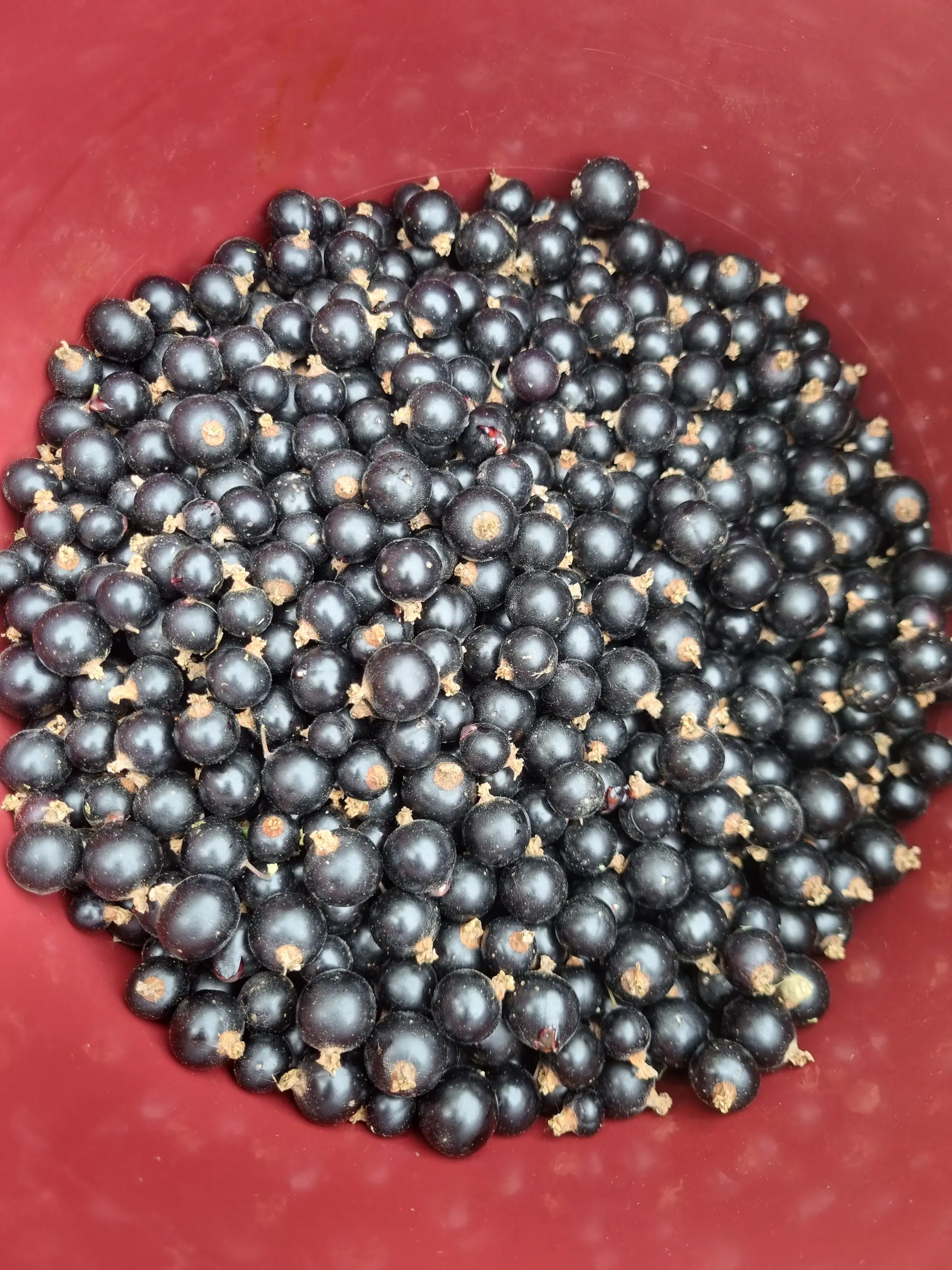
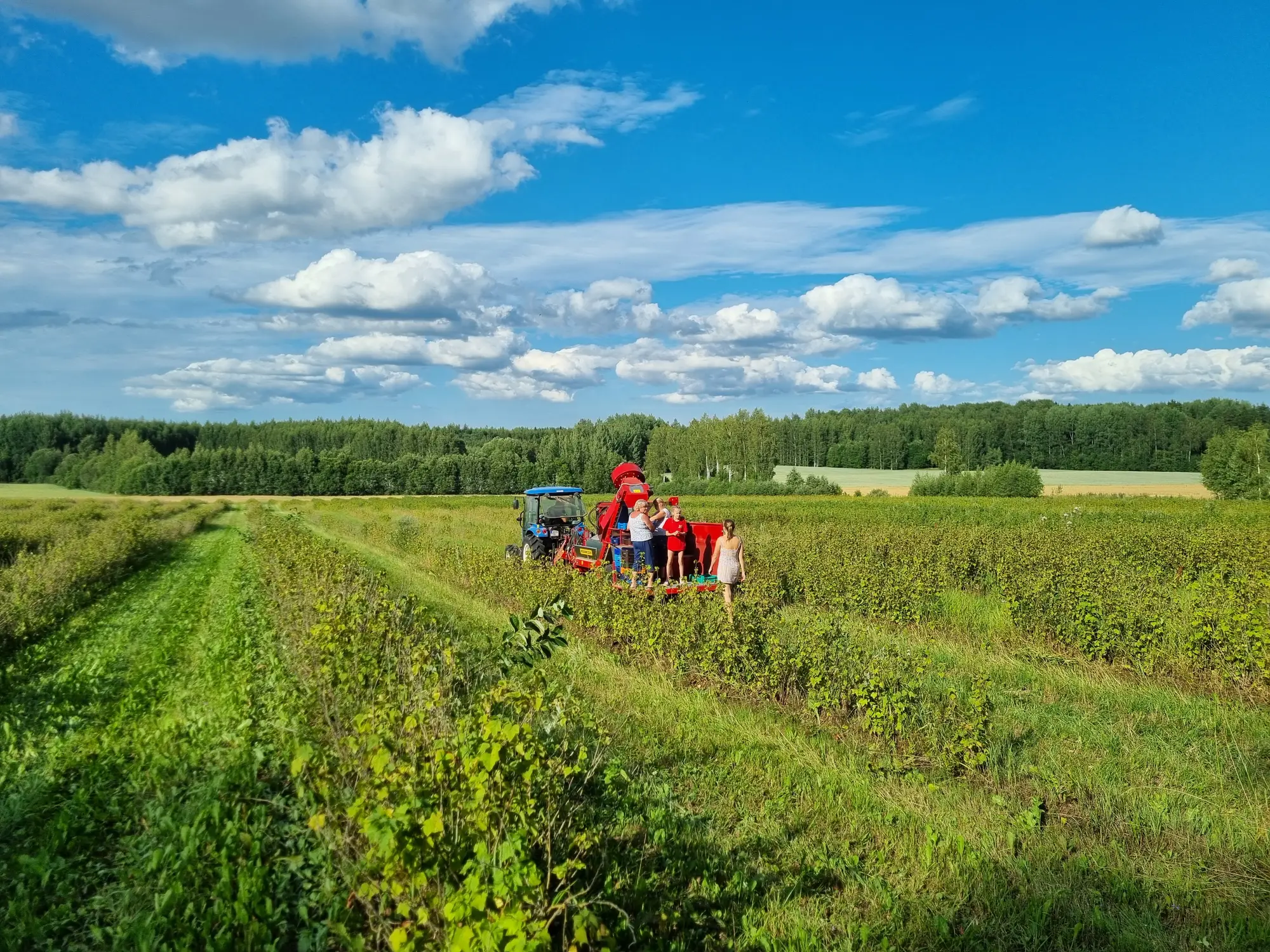
Dark, fragrant and full of flavour — grown organically and picked when they are ready.
The berry
The blackcurrant (Ribes nigrum) is a northern berry through and through. It loves cool winters and long summer days, and it has been grown in Estonian gardens for as long as anyone can remember.
Our bushes grow in open rows in clean Setomaa countryside. We look after them by hand, and the berries ripen slowly, building up the deep colour and bold aroma that make a good blackcurrant unforgettable.
What we offer
Fresh berries
July
Straight from the bushes during the harvest. Best ordered in advance.
Frozen berries
All year
Frozen quickly after picking, so summer keeps until winter.
Larger quantities
By arrangement
For producers, kitchens and shops — get in touch to talk about volumes.
For prices and availability, please contact us. Contact us →
Certified organic
Männi Talu is certified organic under European Union rules. That means no synthetic pesticides, no synthetic fertilisers and an annual inspection by the Estonian Agriculture and Food Board.
For us it is also simply the way the land should be looked after — so that the bees, birds and soil life are still here for the next generation.
The blackcurrant calendar
The highlighted months are the harvest season.
January
February
March
April
May
June
July
August
September
October
November
December
In the kitchen
Blackcurrants are wonderful in juices, jams, cakes and sauces — and simply stirred with sugar, the way Estonian grandmothers have always done it.
Raw-stirred blackcurrants
1 kg blackcurrants
500–700 g sugar
Rinse the berries and let them dry.
Blend or crush the berries together with the sugar.
Stir now and then until the sugar has dissolved.
Spoon into clean jars and keep in the fridge, or in the freezer for winter.
Nothing is cooked, so the fresh flavour and vitamins are kept.